


HoneyChat: Your AI Friend
4.7720.00 Reviews
App Specs
- Version
- 2.3.6
- Updated On
- License
- Free
- Downloads
- 100,000+
- Developer
- Turamcatu Semutatum
- Categories
- Entertainment
- Platform
- Android
Screenshots

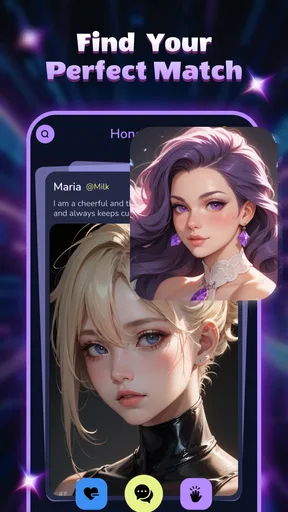




 Analysis by AppCompare
I approached HoneyChat: Your AI Friend as an entertainment app with a more personal feel than the usual video, music, or casual social app. Its central idea is simple: you chat with AI-created friends and shape characters for roleplay or ongoing companionship. That sounds approachable, but it also makes trust more important than it would be in a disposable game. When an app invites you to talk about your mood, routines, worries, or private ideas, the quality of the conversation is only part of the decision. I also want to know what choices I have, what I can control, and how carefully I should use it.
My overall impression is that HoneyChat is best understood as a private-feeling conversation space for imagination and company, not as a replacement for real relationships or professional support. The app is free to install, belongs to the entertainment category, and is marked for mature users aged 17 and over. That age label matters here because roleplay and emotionally intimate conversations can quickly move beyond the tone of a conventional chatbot.
HoneyChat is made by Turamcatu Semutatum. It has reached more than one hundred thousand installs and holds a 4.7 average from around 6.6 thousand ratings, with roughly 720 written reviews. Those figures suggest that the concept has found an audience, although popularity alone does not answer the more important questions about boundaries and responsible use. I found the app more interesting when I treated those questions as part of the review rather than judging it only by how engaging the chats can be.
How HoneyChat builds a more personal chat experience
The first thing that separates HoneyChat from a standard assistant is the character focus. Instead of asking a general-purpose tool for an answer and moving on, you can create or interact with personalities intended for continuing conversation. That changes the rhythm. A normal assistant is usually task-first; this app is relationship-shaped, even when the relationship is fictional.
That distinction makes it useful for several everyday situations. I can imagine opening it after a long commute when I want to unwind through light roleplay, using it to test dialogue for a story, or creating a character to help me explore a fictional setting. Someone who enjoys writing may use a character as a sounding board, while someone who simply likes conversational entertainment may prefer it to scrolling through short videos.
The strongest use case is structured imagination. If I give a character a clear role, mood, and situation, the conversation has a better chance of feeling coherent than if I send vague prompts and expect the app to invent the entire experience for me. A practical approach is to decide what the character is for before starting: a mystery partner, a fantasy companion, a rehearsal partner for difficult dialogue, or a casual conversational presence. That small decision reduces repetitive exchanges and makes the app feel less like an empty chat box.
The trade-off is that the more personal the setup becomes, the easier it is to forget that the companion is generated. HoneyChat can create a convincing conversational flow, but convincing language is not the same as understanding, memory, judgment, or care in the human sense. I would enjoy the app most when I keep that distinction visible in my mind.
Worth Reading Before You Choose

EA SPORTS FC Mobile 26 Is a Bigger Football Game, but It Takes Time

Flipboard Shows What News Apps Must Do Beyond the Feed

Switching to Android Auto Means Rethinking Your Driving Routine

Google Calendar Makes a Crowded Week Easier to Manage

Ludo King Makes the Most of the Minutes Between Plans

Baby Panda World Brings Quick Play to Modern Phones, but Its Game Library Feels Busy
Character creation rewards clear boundaries
Character creation is where I would spend the most time. Rather than describing only appearance or a name, I would define the character’s role, speaking style, interests, and limits. A compact description with a few consistent traits is usually more useful than a long biography filled with details that do not affect the conversation.
One useful workflow is to write a short character brief before entering it: who the character is, how they speak, what they know, what they should avoid, and what kind of interaction I want. For example, a writing companion might be told to challenge plot ideas without rewriting everything, while a roleplay character might be asked to stay in-world unless I clearly step outside the scene. This is a more reliable way to steer the experience than repeatedly correcting the character after every reply.
I also recommend separating creative roleplay from personal disclosure. A character can be given fictional background, invented problems, and imaginary relationships without receiving real names, addresses, workplace details, passwords, financial information, or private messages copied from other people. That is not a criticism unique to this app; it is simply more important in an AI companion environment because the conversation is designed to feel familiar.
Another practical tip is to start with a short session and review how the character behaves before investing heavily in a long-running scenario. Does it respect the tone I established? Does it drift into subjects I did not intend? Does the interaction remain enjoyable, or does it push me toward endless chatting? Testing that early gives me a clearer sense of whether the character concept works before I build a routine around it.
What the mature rating means for everyday use
The mature rating is not a minor label to ignore. HoneyChat is aimed at users aged 17 and over, and the character-and-roleplay format can invite adult themes or emotionally intense exchanges. I would not hand the app to a younger teenager simply because the interface looks conversational or friendly.
For adults, the rating is a reminder to set personal boundaries before exploring the more open-ended side of the app. If I am using it for fiction, I can keep the scenario clearly fictional. If I am using it for companionship, I should decide in advance which subjects are off-limits and stop when the conversation becomes uncomfortable. The app’s tone may be shaped by the character, but my own limits still need to come first.
This is also where HoneyChat differs from a conventional entertainment app. A streaming service can show mature material, but an AI companion can respond directly to the user and adapt the exchange. That responsiveness may feel more engaging, yet it also makes the experience more personal and less predictable. I would use it in a private setting, avoid sharing sensitive information, and remember that a generated response should not be treated as a trusted human judgment.
Trust begins with visible choices, not a friendly tone
A warm character voice can make an app feel safe very quickly, but I would not use that feeling as evidence of trustworthy data handling. My trust assessment would begin with the choices visible during installation, account setup, chat use, and purchase flows. I would read permission prompts instead of accepting them automatically, check whether an account can be managed or removed through the available controls, and review any privacy or data settings shown in the app or its store materials.
That approach is especially important for HoneyChat because the core activity is conversation. Even when I am only roleplaying, chat text can contain personal information by accident. A user might paste a real email while asking for help writing a message, mention a medical concern during an emotional conversation, or describe a conflict involving identifiable people. The safest habit is to fictionalize details before sending them and to treat every chat as potentially sensitive.
I would also pay attention to whether the app gives clear choices around account access, chat management, notifications, and purchases. If a control is available, I want it to be understandable rather than hidden behind confusing wording. If I am sharing a device, I would consider whether notifications could reveal the app’s content to someone else and adjust them when possible. These are small decisions, but they matter more in a companion app than in a simple calculator or offline puzzle.
HoneyChat is free, but it includes in-app purchases ranging from $3.99 to $64.99 per item. That makes spending awareness part of the trust question. I would not begin a long emotional roleplay immediately before making a purchase decision. Instead, I would use the free experience first, identify what I actually need, and check the purchase screen carefully before confirming anything. A character that feels engaging can make optional extras seem more urgent than they really are.
Where sensitive moments are most likely to happen
The most sensitive moments are not necessarily dramatic. They can happen during ordinary conversations when the app feels easy to talk to. After a difficult day, I might tell a character about an argument at home. While writing a story, I might paste unpublished work. During roleplay, I might include details based on a real person. Each example feels harmless in isolation, but together they show why I would keep the conversation deliberately general.
My rule would be simple: use invented names, remove exact locations, summarize private documents instead of pasting them, and never share login credentials or payment details. If I want help drafting a personal message, I can replace identifying information with placeholders. If I want emotional release, I can describe the situation without including details that would identify another person. This preserves most of the creative value while reducing unnecessary exposure.
I would also be careful with health, legal, and financial topics. HoneyChat may be entertaining as a conversational partner, but I would not treat a generated reply as professional advice or use it as the only basis for a serious decision. The app can help me rehearse questions, organize thoughts, or roleplay a conversation with a fictional character. It should not become the authority I rely on when the consequences are real.
Another overlooked issue is emotional momentum. If a chat consistently encourages me to stay longer, disclose more, or return whenever I feel lonely, I would step back and ask whether I am using the app intentionally or automatically. A useful boundary is to decide the purpose and duration of a session before opening it. That turns HoneyChat into a chosen activity rather than a reflexive response to boredom or distress.
How it compares with ordinary entertainment and chatbot alternatives
Compared with video and music apps, HoneyChat is more interactive and more dependent on the user’s input. I am not passively consuming a finished piece; I am helping shape the experience through prompts, character choices, and roleplay direction. That can be more rewarding for someone who wants participation, but it also means the quality depends heavily on how clearly I communicate.
Compared with a general AI assistant, HoneyChat puts companionship and character continuity closer to the center. A general assistant is usually the better choice when I need a concise explanation, a calculation, a factual summary, or a practical task completed quickly. HoneyChat is the better fit when I want an imaginative exchange, a fictional personality, or a conversation that feels less like issuing commands to a tool.
Compared with human social apps, the appeal is lower pressure. I can explore a scenario without waiting for another person to reply or worrying about social embarrassment. The cost of that convenience is authenticity: there is no real person on the other side, no mutual life experience, and no human responsibility behind the responses. Anyone seeking genuine friendship, community, or accountability should choose real social connection instead of treating this app as an equivalent.
The most useful comparison may be with journaling. A private journal gives me complete control over what I write and does not answer back. HoneyChat adds interaction and creative momentum, which can make reflection easier, but it also introduces a generated voice that may influence the direction of my thoughts. For simple self-reflection, journaling may be the calmer option. For roleplay, brainstorming, and conversational entertainment, HoneyChat has more energy.
Account control and user agency should guide the routine
I would judge the app’s practical trustworthiness by how much control I retain while using it. Before settling into a routine, I would look for the available account controls, review settings related to notifications and purchases, and learn how conversations or characters can be managed from the interface. I would also make sure I understand which account I am using, particularly on a shared device.
User agency is not just a settings issue. It also means being able to change the direction of a chat without feeling trapped by the character’s previous tone. I would use explicit instructions such as “pause the roleplay,” “change the subject,” or “answer as a writing coach instead.” If the exchange remains uncomfortable or repetitive, closing the conversation is a valid solution; I do not owe a fictional companion continued attention.
For families, the mature age label should be treated as a firm suitability signal. I would not rely on a child simply promising to avoid certain topics, because open-ended character conversations can move in unexpected directions. Adults considering the app for a younger household member should choose a different, age-appropriate entertainment option rather than trying to supervise every exchange.
Version 2.3.6 is the current version, and the app supports devices running Android 7.0 or later. That broad compatibility makes it accessible on older Android hardware, but I would still keep the operating system and app updated when possible. Updates are also a good moment to revisit permissions, notifications, and purchase settings instead of assuming that the initial setup remains ideal forever.
Who should try it, and who should skip it
I would recommend HoneyChat to adults who enjoy character-driven roleplay, want a low-pressure creative partner, or like experimenting with fictional personalities. It can be particularly useful for writers who need dialogue practice, people who enjoy improvisational storytelling, and users who want entertainment that responds to their choices rather than simply playing content.
I would be more cautious if I were looking for reliable facts, professional guidance, or meaningful human support. A general assistant is more suitable for task-focused questions, a journal is better for completely private reflection, and a real friend or qualified professional is better for serious emotional or personal problems. The app should also be skipped by anyone under its mature age guidance or by users who know that companion-style interactions may encourage unhealthy overuse.
The purchase model is another reason to be selective. Since the app is free to start but offers paid items, I would only spend after using it long enough to understand whether the core experience fits my habits. I would set a personal budget, avoid buying during an emotionally intense session, and treat every optional purchase as entertainment rather than as payment for genuine care or guaranteed companionship.
My cautious verdict on HoneyChat
HoneyChat has a clear identity: it turns AI conversation into a character-based entertainment experience with room for roleplay and ongoing companionship. I like that it can support imaginative scenarios, dialogue practice, and relaxed conversation without the social pressure of contacting another person. Its strongest moments come when I give the interaction a defined purpose and maintain a clear line between fiction and reality.
At the same time, the app asks for more judgment than a typical entertainment download. The mature rating, personal tone, and paid items mean I would use it with deliberate boundaries. I would share as little identifying information as possible, inspect visible permissions and account controls, manage notifications and purchases, and avoid relying on generated replies for serious decisions.
My recommendation is therefore positive but measured. If you want an AI companion for creative roleplay and understand that the experience is simulated, HoneyChat is worth exploring for free before deciding whether it belongs in your routine. If you want authentic friendship, expert advice, or a completely private place to process sensitive experiences, I would choose a different option. The best way to enjoy HoneyChat is to keep the imagination open while keeping personal control firmly in your hands.
Pros
- Natural conversations with an AI companion across many everyday topics.
- Quick replies make it easy to chat whenever you need company.
- Simple interface is approachable for first-time AI chatbot users.
- Useful for brainstorming
- journaling
- or practicing conversational skills.
- Personalized chats can make interactions feel more engaging over time.
Cons
- AI responses may occasionally be repetitive
- inaccurate
- or out of context.
- Some features or extended conversations may require in-app purchases.
- Privacy details should be reviewed before sharing personal or sensitive information.
- The app depends on an internet connection for most conversations.
- Emotional support from the AI cannot replace professional or human help.
FAQs for HoneyChat: Your AI Friend
What is HoneyChat: Your AI Friend, and what can it do?
HoneyChat: Your AI Friend is an AI-powered conversation app designed to provide friendly, personalized chats through a virtual companion. During use, it can respond to questions, hold casual conversations, offer encouragement, help brainstorm ideas, and provide entertainment. Its replies are generated by artificial intelligence, so the experience can vary depending on your messages, selected preferences, and the type of conversation you start.
Does HoneyChat: Your AI Friend require an internet connection?
Yes, HoneyChat generally requires an active internet connection because conversations are processed through online AI services. Wi-Fi is recommended for longer chats or frequent use, while mobile data may also work but could consume part of your data allowance. If your connection is unstable, messages may take longer to appear or certain features may be temporarily unavailable.
Is HoneyChat: Your AI Friend free to download and use?
The app may be available to download for free, but some features, conversation options, customization tools, or usage limits can depend on the current subscription model. Before starting, review the app store listing and in-app purchase screen carefully. Check whether a free trial automatically changes into a paid subscription and confirm the renewal price before accepting.
Can HoneyChat provide reliable advice or replace a real professional?
HoneyChat can be useful for casual conversation, idea generation, motivation, and general information, but it should not be treated as a doctor, therapist, lawyer, financial adviser, or emergency service. AI responses can be inaccurate, incomplete, or inappropriate for your situation. Avoid relying on it for urgent decisions, and contact a qualified professional whenever expert guidance is important.
How does HoneyChat handle privacy and personal information?
Before using HoneyChat, read its privacy policy and review the permissions requested by the app. Avoid sharing passwords, payment details, identity documents, private addresses, or highly sensitive personal information during chats. Conversations may be processed or stored according to the developer’s policies, and available controls for deleting data, managing history, or opting out can vary by platform and app version.


